Author: Sein Wai Hlyan

SWOT Analysis of Ford Motor Company: Analyzing Strategic Management

Strategic management, a continuous and iterative process, involves aligning an organization’s resources with its goals and objectives to achieve competitive advantage and sustainable growth (Kenton, 2022). Among various strategic management frameworks, SWOT analysis serves as a cornerstone, offering a comprehensive understanding of an organization’s internal and external factors that influence its strategic decisions. This paper delves into the SWOT analysis of Ford Motor Company, shedding light on its strengths, weaknesses, opportunities, and threats, while emphasizing the critical role of strategic management in the dynamic automotive industry.

Background and Main Issues

Ford Motor Company, a global automotive behemoth employing approximately 200,000 individuals, has carved a niche in designing, manufacturing, marketing, and servicing cars, trucks, and SUVs while investing in emerging technologies such as electrification and autonomy (Jurevicius, 2022). The company’s journey is replete with milestones and challenges that have shaped its trajectory in the automotive landscape. Analyzing its strengths, weaknesses, opportunities, and threats will provide insights into the factors that define Ford’s strategic direction and market competitiveness.

Main Strengths

Ford boasts several strengths that have contributed to its prominence. These include its iconic F-Series pickup truck line, a formidable brand reputation, a strong foothold in China’s burgeoning automotive market, diverse revenue streams, and a forward-looking strategy driven by robust research and development (Jurevicius, 2022). Among these, Ford’s brand reputation is its most potent asset. Having established a global network of manufacturers and distributors across over 60 countries, Ford’s brand equity has been meticulously cultivated over decades, aligning with quality, innovation, and customer satisfaction.

Significant Weaknesses

However, Ford is not immune to weaknesses. Its brand portfolio is often perceived as lacking in diversification, relying heavily on trucks and SUVs, which limits its ability to cater to evolving consumer preferences (Shaw, n.d.). Furthermore, Ford has witnessed a decline in its market share within the United States, signifying a struggle to keep pace with shifting market dynamics. Additionally, Ford’s reliance on smaller vehicle models raises questions about its preparedness to adapt to potential market shifts, and its history of vehicle recalls and dependability issues has eroded consumer trust (Shaw, n.d.).

Opportunities for Evolution

In an industry characterized by rapid technological advancements and changing consumer behaviors, Ford’s opportunities lie in various areas. The prospect of market growth, particularly in regions like China and India, presents an avenue for Ford to expand its customer base and strengthen its global presence. Leveraging advancements such as autonomous vehicles and digital marketing can provide Ford with a competitive edge. Investments in self-driving technology and collaborations for delivery services demonstrate Ford’s willingness to embrace innovation (Jurevicius, 2022). Moreover, the push towards environmental sustainability and the growing demand for electric vehicles presents Ford with an opportunity to meet the evolving needs of environmentally conscious consumers.

Threats to the Company

Ford faces a myriad of threats that necessitate careful strategic planning. Intensifying competition, especially from disruptive entrants like Tesla, poses a substantial challenge. These competitors redefine industry norms with cutting-edge technologies, making it imperative for established players like Ford to remain agile and responsive (Shaw, n.d.). Furthermore, increasing government regulations aimed at emissions standards and safety measures require Ford to invest resources in compliance, potentially diverting attention from innovation and growth. Economic and political uncertainties on the global stage, alongside volatile fuel prices, can affect consumer purchasing behaviors and impact Ford’s market position.

Conclusion

In conclusion, a robust SWOT analysis of Ford Motor Company underscores the significance of strategic management in an ever-evolving industry. By leveraging strengths, addressing weaknesses, capitalizing on opportunities, and mitigating threats, organizations can chart a course for sustained growth and market leadership. The dynamic nature of the automotive sector demands a proactive approach to strategic management, where agility, innovation, and foresight play pivotal roles in shaping an organization’s future trajectory.

Strategic management serves as the compass that guides organizations toward their objectives amidst a complex and uncertain landscape. Through strategic management, organizations like Ford can effectively allocate resources, adapt to changing market dynamics, and remain relevant to consumers. By integrating SWOT analysis into the strategic management process, companies gain insights that empower them to optimize their strengths, fortify their weaknesses, seize opportunities, and navigate threats, thereby ensuring their resilience and competitive edge.

References:

Jurevicius, O. (2022, August 16). SWOT Analysis of Ford (5 Key Strengths in 2022). Retrieved from Strategic Management Insight: https://strategicmanagementinsight.com/swot-analyses/ford-swot-analysis/

Kenton, W. (2022, January 3). Strategic Management Definition. Retrieved from Investopedia: https://www.investopedia.com/terms/s/strategic-management.asp

Shaw, A. A. (n.d.). SWOT Analysis of Ford. Retrieved from SWOT and Pestle Analysis: https://swotandpestleanalysis.com/swot-analysis-of-ford/
Analysis of the Burning Platform Memo

The “Burning Platform” memo, delivered by Nokia’s CEO Stephen Elop, stands as a compelling example of strategic communication that aimed to drive critical organizational change (Anthony, 2011). Through a deeper analysis of the elements and implications of this memo in relation to James’s Operations Management concepts, several key insights emerge, shedding light on its effectiveness and significance.

Elop’s memo encompasses critical elements of effective operations management:

  • Shared Goal: The vivid metaphor of a burning platform creates a shared goal that unites individuals within the organization around a common purpose and sense of urgency. This aligns well with operations management principles, where a cohesive vision is pivotal to coordinated efforts.
  • Motivation and Unity: By invoking a narrative of crisis and change, Elop aims to motivate employees toward unified action. His call for collaboration resonates with the principle of creating a motivated and engaged workforce, which is central to effective operations.
  • Showcasing Success: Elop strikes a balance by acknowledging Nokia’s past accomplishments while emphasizing the need for continuous excellence. This mirrors the operations management approach of building upon strengths while addressing weaknesses.
  • Problem-Solving Approach: The memo’s focus on addressing challenges aligns with the core of operations management – identifying issues, devising solutions, and implementing improvements.

The memo’s tenets find parallels in Hill’s framework for Operations Strategy formulation (James, 2011). Elop’s memo addresses all stages of Hill’s approach, from defining corporate objectives to establishing suitable delivery methods and necessary infrastructure. This synergy underscores the memo’s strategic depth in tackling Nokia’s challenges.

Internal factors such as technical expertise and capability are implicitly addressed as Elop urges transformative action. The urgency to innovate aligns with the operations management principle of staying ahead of industry trends. External factors, including evolving consumer preferences and emerging competitors, correlate with the memo’s call for adaptability and survival in a changing landscape.

Elop’s decision to use vivid imagery and impactful language warrants examination. By invoking metaphors of crisis, he aims to evoke a heightened sense of urgency and commitment. This approach seeks to mobilize employees akin to times of extreme adversity, where extraordinary efforts become the norm.

While Elop’s approach carries merits, it also raises potential concerns. On one hand, it can reinvigorate the workforce, fostering dedication and resilience. On the other hand, employees might perceive the tactics as manipulative, potentially leading to skepticism or resistance, thereby dampening morale.

In conclusion, Elop’s “Burning Platform” memo remains an inspiring and effective method to drive transformative change within an organization facing critical challenges. The alignment between his messaging and core operations management principles underscores the memo’s strategic soundness. By effectively communicating the organization’s reality, imperatives, and aspirations, this approach serves as a catalyst for positive and necessary change.

References:

Anthony, S. D. (2011, December 11). How to Anticipate a Burning Platform. Retrieved from Harvard Business Review: https://hbr.org/2012/12/how-to-anticipate-a-burning-platform#

James, T. (2011). Operations Strategy. Bookboon. Retrieved from https://my.uopeople.edu/pluginfile.php/550073/mod_page/content/9/BUS5116James.pdf

Edwards, J. (2013, September 3). All Microsoft Employees Should Read Stephen Elop’s ‘Burning Platform’ Memo Right Now. Retrieved from Business Insider: https://www.businessinsider.com/stephen-elops-burning-platform-memo-2013-9

Analyzing a Conflict of Interest in the Myanmar Forest Department

Introduction:

Conflict of interest (COI) is a complex ethical issue that arises when personal interests clash with professional responsibilities, potentially compromising impartial decision-making. Within the context of business, COI occurs when an individual’s personal gains supersede the interests of the organization they serve (Segal, 2022). In this paper, we will examine a specific instance of COI within the Myanmar Forest Department, a public organization responsible for managing the country’s forests and timber-related activities.

The Particular COI:

COI can manifest in various forms, including financial and non-financial conflicts, conflicts of roles, and predetermination (GanIntegrity, n.d.). In the case of the Myanmar Forest Department, the conflict type that stands out is “Business Relationships.” This type of COI emerges when an individual concurrently holds a position in a public sector entity and has an interest in business enterprises bidding for government contracts (GanIntegrity, n.d.). Given the department’s responsibilities and the economic significance of timber-related activities, such conflicts could jeopardize fair decision-making and transparent practices.

Laws and Regulations:

The Myanmar Forest Department operates within the framework of specific laws and regulations designed to govern public sector activities. Some key regulations include the Civil Service Law (2013), Civil Service Rules (2014, revised in 2017), and the Office Manual (2011) (Union Civil Service Board, n.d.). These regulations lay out guidelines for recruitment, promotions, disciplinary actions, and employee conduct.

Policy and Existing Laws’ Support:

The laws and regulations governing the Myanmar Forest Department aim to uphold ethical behavior and mitigate COI risks. These regulations establish standards for employee conduct and outline consequences for violations. While policies and laws exist to support ethical conduct and minimize COI, their effectiveness hinges on proper enforcement and management practices.

Challenges and Improvement:

One key challenge in addressing COI within the Forest Department may be the financial disparity between public sector salaries and potential earnings from external business relationships. Addressing this challenge requires a multifaceted approach, involving improving public sector remuneration and implementing stricter enforcement of existing laws to prevent employees from engaging in conflicting business relationships.

Ethical Behavior and Implementation:

The ethical behavior of Forest Department employees is influenced by their adherence to established regulations. While the existing laws and policies provide a framework for ethical conduct, the implementation and monitoring of these regulations by management play a crucial role in ensuring compliance. Ethical behavior is not only an individual responsibility but also a collective effort by the organization to foster a culture of transparency and integrity.

Recommendations:

To effectively tackle COI in the Myanmar Forest Department, several recommendations can be considered. First, the organization should conduct regular training and awareness programs for employees and management about the implications of COI and the importance of ethical behavior. These initiatives can foster a better understanding of the potential pitfalls of engaging in conflicting business relationships. Second, the government could consider periodic reviews of public sector salaries to ensure they are competitive and reflective of employees’ skills and responsibilities. Adequate remuneration can reduce the financial incentive for individuals to seek external business relationships that may lead to COI.

Furthermore, strengthening mechanisms for reporting and addressing COI is vital. Implementing confidential reporting channels can encourage employees to come forward with concerns without fear of retaliation. Additionally, establishing an independent oversight body to review potential COI cases can enhance transparency and impartiality. Lastly, the Forest Department should regularly assess its policies and regulations to ensure they remain aligned with evolving ethical standards and best practices. By consistently evaluating and adapting these measures, the organization can safeguard against COI risks and promote a culture of integrity and accountability.

Conclusion:

In conclusion, the conflict of interest (COI) within the Myanmar Forest Department underscores the delicate balance between personal interests and professional responsibilities. COI can arise when individuals simultaneously hold roles in both public entities and private businesses bidding for government contracts. This situation has the potential to compromise transparency and fairness in decision-making processes. The existing laws and regulations, such as the Civil Service Law (2013), Civil Service Rules (2014, revised in 2017), and the Office Manual (2011), provide a foundation for ethical conduct and COI prevention. These regulations set guidelines for employee behavior, including matters related to COI.

However, the effectiveness of these laws and regulations hinges on their proper implementation and enforcement. To address the challenge posed by financial disparities and potential COI arising from business relationships, a multifaceted approach is required. This approach entails not only stricter enforcement of existing regulations but also measures to improve public sector remuneration. Ultimately, ethical behavior within the Forest Department is a collective responsibility shared by both employees and management. Upholding a culture of transparency, integrity, and adherence to established regulations will help mitigate COI risks and ensure the organization’s commitment to ethical conduct.

References:

GanIntegrity. (n.d.). Conflict of Interest. Retrieved from https://www.ganintegrity.com/compliance-glossary/conflict-of-interest/

Segal, T. (2022, March 24). Conflict of Interest. Retrieved from https://www.investopedia.com/terms/c/conflict-of-interest.asp

Union Civil Service Board. (n.d.). Printing. Retrieved from https://www.ucsb.gov.mm/printing

The Significance of Ethics in Business Management

Ethics, the principles and practices that guide individuals in their actions and decisions, extend across various facets of life, including personal relationships, professional interactions, and business conduct (A Framework for Ethical Decision Making, 2021). In the context of business, ethics pertain to how organizations navigate moral dilemmas, ensuring that their actions align with societal standards and uphold the well-being of stakeholders. The role of ethics in business management is critical, as it influences organizational culture, employee behavior, stakeholder trust, and long-term sustainability.

Ethics in Business Management:

Ethical decision-making within business management encompasses a range of areas, from interactions among coworkers to conflicts of interest, transparent marketing practices, customer safety, information security, and responsible utilization of corporate resources. Effective business managers recognize the intricate web of ethical considerations and strive to uphold values that not only foster a positive work environment but also contribute to the greater good.

Leadership’s Impact:

Leaders and managers hold a pivotal role in cultivating an ethical workplace. Their actions, decisions, and conduct set the tone for the organization’s ethical standards. When leadership demonstrates commitment to ethics, employees are more likely to adhere to ethical codes, follow guidelines, and trust their managers (Why Ethics Are Still Essential in Management, 2021). Such an environment not only enhances productivity and performance but also fosters trust and engagement among employees.

Sustainability and Ethics:

Sustainability is intrinsically linked to ethical business management. As organizations grapple with environmental and social challenges, ethical decisions determine the long-term impact on communities, ecosystems, and stakeholders. Ethical leaders understand that responsible management practices today translate to a sustainable and prosperous future. Their commitment to sustainability sends a powerful message that the organization prioritizes ethical conduct and values that extend beyond immediate profits.

Ethics vs. Unethical Practices:

Differences between ethical and unethical organizations and management are stark. Ethical organizations prioritize transparency, fairness, and stakeholder welfare. Ethical managers listen to employee opinions, encourage collaboration, and lead by example. Conversely, unethical practices often result in low employee morale, reduced productivity, and a negative impact on brand reputation. Unethical managers may prioritize self-interest over collective success, leading to a toxic work environment and poor organizational outcomes.

Personal Experience:

In my own experience, I’ve witnessed contrasting leadership styles that illuminate the role of ethics in management. An ethically-minded director who values collective decision-making fosters a collaborative atmosphere. Such leadership results in clear guidance, effective management, and high productivity. In contrast, a manager who disregards others’ opinions and solely makes decisions may create a disengaged and unproductive workplace. This underscores the importance of ethics in shaping not only managerial behavior but also overall workplace dynamics.

Conclusion:

Ethics are the bedrock of effective business management. Ethical decisions influence organizational culture, employee commitment, stakeholder trust, and long-term sustainability. Leaders and managers play a pivotal role in setting ethical standards, fostering a positive workplace environment, and ensuring responsible business practices. By adhering to ethical principles, businesses can cultivate an environment of trust, collaboration, and success, while contributing to a more ethical and sustainable future.

Word Count: 513

References:

A Framework for Ethical Decision Making. (2021, Nov 8). Retrieved from Markkula Centre: https://www.scu.edu/ethics/ethics-resources/a-framework-for-ethical-decision-making/

Why Ethics Are Still Essential in Management. (2021, October 12). Retrieved from Southeastern Oklahoma State University: https://online.se.edu/articles/mba/why-ethics-are-still-essential-in-management.aspx#

Brusseau, J. (n,d.). Business Ethics. Retrieved from https://2012books.lardbucket.org/books/business-ethics/index.html

The Influence of Demographic Factors on Customer Decision-Making Process and Buying Behavior

The customer decision-making process, a complex interplay of internal and external factors, shapes the choices consumers make when purchasing products or accepting service offers (Principles of marketing, 2015). Among these influential factors, demographic elements such as age, gender, income, and education play pivotal roles in shaping customer behavior and influencing their decisions. This article examines why demographic factors hold significance in the customer’s decision-making process and how they impact buying behavior.

Age: Age is a dynamic determinant of consumer behavior. As individuals progress through different life stages, their needs, preferences, and priorities evolve. During youth, the inclination might be towards entertainment, fashion, and leisure activities, while as people mature, priorities shift towards more utilitarian and practical choices (Pratap, 2021). A marketer’s understanding of the target audience’s age group aids in tailoring products, advertisements, and marketing strategies to align with their evolving needs.

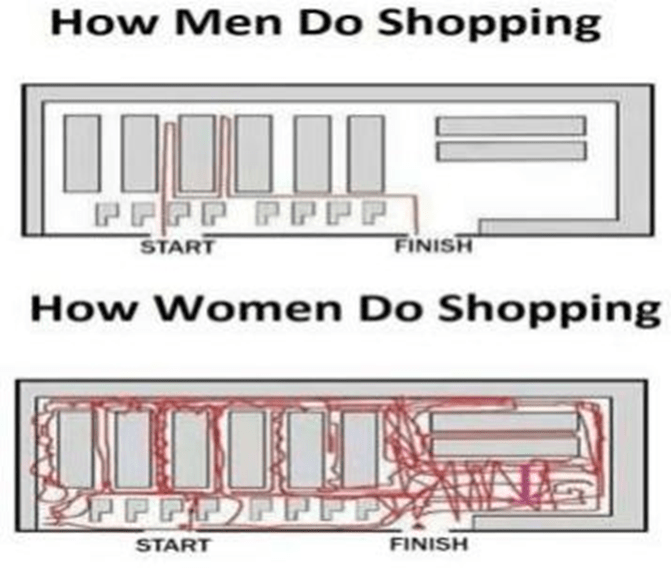
Gender: Gender significantly influences consumer behavior. Men and women have distinct cognitive, emotional, and social characteristics that impact their purchasing patterns. Men and women may differ in terms of sensitivity, decision-making processes, and factors that influence their buying choices (Lakshmi et al., 2017). By recognizing these gender-based nuances, marketers can design campaigns that resonate better with each gender’s unique traits and preferences.

Following figure (Figure 1) will give you a supportive though about how importance of Gender in buying behavior.

Figure 1

Difference between shopping styles of men and women

Note: By Lakshmi et al., 2017, the figure shows the difference between how men and women do shopping

Income: Income levels hold sway over the purchasing decisions of consumers. Individuals with lower incomes prioritize essential products that cater to their basic needs, while those with higher incomes may indulge in luxury or lifestyle items (Pratap, 2021). Marketers need to understand the financial capacities of their target audience to offer products that are not only aligned with their budget but also provide value.

Education: Education levels significantly impact consumer behavior. Highly educated consumers tend to be more discerning and thorough in their decision-making process. They are more likely to conduct extensive research, seek in-depth information, and make informed choices. In contrast, less educated individuals might be more susceptible to impulse buying or be influenced by advertisements (Principles of marketing, 2015). Tailoring marketing strategies to accommodate varying levels of consumer education can yield more effective results.

Conclusion: The interplay between demographic factors and consumer decision-making is intricate and impactful. Age, gender, income, and education contribute to shaping individuals’ preferences, needs, and buying behavior. Marketers must grasp these demographic nuances to create targeted and relevant marketing strategies. By understanding the diverse needs of different customer segments, businesses can tailor their offerings, advertisements, and approaches to build stronger customer connections and drive more effective results.

Word Count: 409

References:

Principles of marketing. (2015). Retrieved from University of Minnesota Libraries Publishing: https://doi.org/10.24926/8668.1901

Lakshmi, V. V., Niharika, D. A., Lahari, G. (2017). Impact of Gender on Consumer Purchasing Behaviour. IOSR Journal of Business and Management (IOSR-JBM).

Pratap, A. (2021, December 27). Effect of Demographic Factors on Consumer Behavior: Age, sex, Income and Education. Retrieved from https://notesmatic.com/effect-of-demographic-factors-on-consumer-behavior-age-sex-income-and-education/

Key Components of an Effective Strategic Marketing Plan

Introduction

Developing a strategic marketing plan is a multifaceted endeavor that involves meticulous analysis, forward-looking vision, and systematic execution. This paper delves into the core components that constitute a successful strategic marketing plan, drawing insights from the mission statements of Amazon and Wal-Mart to underscore the significance of these elements in driving business growth.

Analysis of Mission Statements

Amazon’s Mission Statement: Amazon’s mission statement reflects a forward-looking orientation that resonates with its position as a customer-centric global marketplace (Olsen, 2021). The statement’s emphasis on becoming the world’s most customer-centric marketplace showcases the company’s commitment to innovation and responsiveness to evolving customer needs. This futuristic perspective aligns with the principles of market orientation, as it seeks to anticipate and meet consumer demands and preferences (Kopp, 2021).

Wal-Mart’s Mission Statement: Wal-Mart’s mission centers on a value proposition that revolves around saving customers money to enhance their quality of life (About Walmart, n.d.). This promise is substantiated by the company’s extensive network of retail stores, clubs, and digital platforms that consistently offer competitive pricing. By delivering on this mission, Wal-Mart reinforces its dedication to customer value and convenience, establishing a strong foundation for its strategic planning.

Key Components of a Strategic Marketing Plan

  1. Mission and Vision Statements: Mission and vision statements provide a clear sense of purpose and direction for an organization. A well-defined mission statement encapsulates the company’s raison d’être, while a visionary statement sets the long-term goals and aspirations, ensuring alignment across the organization.
  2. Core Values: Core values establish the ethical framework and cultural norms that guide an organization’s behavior. These values underscore the company’s commitment to integrity, accountability, and social responsibility, shaping its interactions with stakeholders.
  3. Comprehensive Analysis: An effective strategic marketing plan requires a thorough analysis of both internal and external factors. This entails assessing the organization’s strengths and weaknesses, identifying market opportunities, understanding consumer behaviors, and evaluating competitive landscapes.
  4. Technology Integration: In the digital age, technology plays a pivotal role in marketing strategies. Integrating technology allows for data-driven decision-making, targeted communication, and enhanced customer engagement. Technological tools facilitate the collection and analysis of consumer insights, enabling the refinement of marketing efforts.
  5. Resource Allocation and Implementation: A well-crafted marketing plan allocates resources strategically to ensure optimal execution. This involves allocating financial resources, human capital, and materials to support marketing initiatives, campaigns, and projects.

Conclusion

A robust strategic marketing plan comprises key components that collectively shape an organization’s trajectory. Mission and vision statements provide a purposeful direction, while core values serve as guiding principles. Comprehensive analyses offer insights into market dynamics, technology integration facilitates innovation, and strategic resource allocation ensures efficient execution. By leveraging these components, companies can navigate the complexities of today’s competitive landscape, drive brand recognition, foster customer loyalty, and achieve sustainable growth.

Word Count: 454

References

Olsen, E. (2021, April 03). Mission Statements. Retrieved from OnStrategy: https://onstrategyhq.com/resources/mission-statements/

Kopp, C. M. (2021, February 27). Market Orientation. Retrieved from Investopedia: https://www.investopedia.com/terms/m/market-orientation.asp#:~:text=Market%20orientation%20is%20an%20approach,and%20services%20that%20satisfy%20them.&text=It%20may%20sound%20obvious%2C%20but,product%20development%20is%20the%20opposite.

About Walmart. (n.d.). Retrieved from Walmart: https://corporate.walmart.com/about

Success of Shwe Pyi Nann’s Cosmetic brand and its products

A product can be a good or service or the combination of these two that is available in the market for sale to the end consumer while a brand is a combination of promise, wants and emotions and is associated with reliability, credibility, and quality that gives a sense of satisfaction to the customers (Surbhi, 2018).  This research paper is an analysis of a successful brand and products of a cosmetic company, named “Shwe Pyi Nann”, which is the biggest, most successful, and longest standing cosmetics brand in Myanmar formerly known as Burma. The brand, Shwe Pyi Nann, means “Golden Kingdom’s Palace”.

Brand Background

Shwe Pyi Nann Group was established in 1940 and mainly produces Thanakha (known as Burmese traditional Makeup) which is Myanmar Traditional Cosmetic Obtained from Limonia Acidissima tree with the brand name of “Shwe Pyi Nann”. Traditionally, Burmese people grind the tree bark against a flat and wet circular smooth stone then put the paste on the face as a unique traditional makeup for daily life that can only see in Myanmar (Thanakhar, 2020).

After Shwe Pyi Nann group found that Thanakha contains natural cormorant and can prevent Ultra Violet rays when it was tested and analyzed in the laboratory, they tried to produce as a natural cosmetic product and to implement international quality management standards and got ISO certification (Shwe Pyi Nann Thanakha Products, n.d.). Nowadays, the product has been mixed up with essential floral and herbal oil and water. The user no longer need to grind the bark and can readily put the paste by mixing a required amount of water to be able to apply on the face.

Analysis of marketing media

            Shwe Pyi Nann was found that they firstly advertised their products through state owned media like TV channels and radios since their production. For today, The Company mostly uses Facebook as a marketing medium. By posting descriptions for each product, questionnaires for the reviews, knowledge for the products, and promotion posters, the page would be getting a lot of organic reach. In addition, the Company conducts promotion shows through hiring traditional comedy artists in most of the big cities throughout the country. Furthermore, they expend their customers through Facebook and YouTube when the records of comedy shows uploaded on. For exporting and local distributions of their products, they use their owned website.

Analysis of 4 Ps of marketing

Marketing includes four activities (creating, communicating, delivering, and exchanging offerings) which are traditionally viewed as 4 Ps of marketing: product, promotion, place, and price although there are different characteristics (Principles of marketing, 2015). 4 Ps of Shwe Pyi Nann can be analyzed in the following statements.

Product – All of the products are made with Thanakha by mixing flower stamen of ironwood tree, lime, jasmine, milk and Aloe Vera. Different kinds of products with different sizes can be found in the following kinds of cosmetics:

  • Natural Thanakha paste which is ready to apply,
  • Facial form,
  • Pudding Face Cream,
  • Body lotion, and
  • Moisturizers.

Promotion – Facebook is main advertising and promotion tool although TV channels were their first promotion communication. For reaching out to a lot of new customers, they conduct promotion shows with the most popular comedy artists.

Place – Shwe Pyi Nann mainly distributes their products in local cosmetic shops across the country where every consumer can be easily accessible to their products. E-commerce website cannot be found and they just use Facebook platform for online selling. Most of the products can also be found in supermarkets in big cities. 

Price- Most price around 2 USD for all of the products are not too high and can be affordable for any age, gender, and race. The customer can feel it is worth to use their products with these prices and descriptions of the products can give the reliability to apply.

Value proposition

As a value proposition which is the promise of value that our customer can expect our business can provide services or products which a competitor can’t offer (Coleman, 2022). I have formulated a value proposition for the brand of Shwe Pyi Nann as following.

“Established in 1940, Shwe Pyi Nann is the best local brand in Myanmar, producing high-quality Myanmar’s Thanakha skin care products which have no chemical that might harm your skin and has been mixed up with essential floral, herbal oil, and water.”

In conclusion, Shwe Pyi Nann strongly stands today as the biggest, most successful, and longest standing cosmetics brand with incomparable experience, expertise and distributions networks accumulated over 75 years in Myanmar’s cosmetics industry.

References

Coleman, B. (2022, January 21). How to Write a Great Value Proposition. Retrieved from Hubspot: https://blog.hubspot.com/marketing/write-value-proposition

Principles of marketing. (2015). Retrieved from University of Minnesota Libraries Publishing

Shwe Pyi Nann Thanakha Products. (n.d.). Retrieved from Shwe Pyi Nann: http://www.shwepyinann.com/companies/shwe-pyi-nann/products/shwe-pyi-nann-thanakha-products

Surbhi, S. (2018, July 26). Difference Between Product and Brand. Retrieved from Key Differences: https://keydifferences.com/difference-between-product-and-brand.html#:~:text=The%20product%20is%20an%20item,is%20something%20more%20than%20that.

Thanakhar (Burmese Traditional Make-up). (2020, August 21). Retrieved from Lucky Treasure Travels & Tours: https://www.luckytreasuretravels.com/blog/post/thanakhar-burmese-traditional-make-up/

Expanding Reach to End-Users for Ah May Htwar Peanut Oil: A Strategic Approach

Introduction

Imagine inheriting Ah May Htwar (AMH), a reputable local peanut oil producer in Myanmar. Established in 2002, AMH’s success has been driven by its commitment to quality, utilizing traditional techniques fused with modern advancements. This paper outlines a strategy to extend AMH’s distribution to end-users, tapping into new market segments and fortifying its market presence.

Background and Product Overview

AMH specializes in producing premium peanut and sesame oil, offering various bottle sizes catering to diverse consumer needs. Our products are manufactured using cutting-edge technology, clean raw materials, and meticulous production processes. Quality assurance is maintained through Total Quality Management (TQM) practices. With FDA and ISO certifications, AMH guarantees consumer safety and satisfaction (Ahmay Htwar Profile, n.d.).

Current Distribution Landscape and Ambition

Traditionally, AMH has fostered relationships with over 3,500 distributors, spanning local eateries, supermarkets, and small shops nationwide. However, to elevate our market reach, we envision extending our distribution network to end-users, forging direct connections with consumers across the country.

Target Market

Our expansion focuses on three key consumer groups:

  1. Health Enthusiasts: Individuals seeking fresh, pure, and unadulterated peanut oil.
  2. Housewives: Those desiring untainted peanut oil for their culinary needs.
  3. Respectful Individuals: Individuals valuing the tradition of gifting pure peanut oil to elders, complemented by innovative packaging.

Approach and Value Proposition

To capture our target market’s attention, we will leverage social media platforms like Facebook, tapping into their extensive reach and engagement capabilities. Our unique value proposition, “AMH’s benevolence to customer,” resonates with our commitment to quality and customer well-being.

Value Proposition Components

“The essence of healthy and happy family longevity is the taste of life.”

  1. Advanced Technology: Our products are crafted using advanced techniques, ensuring quality and purity.
  2. Uncompromised Quality: We provide fresh peanut oil devoid of any additives, maintaining the genuine flavor.
  3. Premium Ingredients: Only the finest clean raw peanuts and sesame are used, contributing to the exceptional taste.
  4. TQM Production: Our products are manufactured under Total Quality Management practices, guaranteeing consistent excellence.
  5. Certified and Approved: With FDA and ISO certifications, AMH products are backed by official validation.

Understanding Competitors

AMH faces competition from local counterparts like Yangon Pure Peanut Oil Company and Bayin Peanut Oil Company. These competitors primarily target local supermarkets, restaurants, and international e-commerce platforms, such as Amazon (Wanjiru, 2019).

Conclusion

Expanding distribution to end-users presents an opportunity for AMH to cultivate deeper connections with consumers and carve a unique niche in the market. By emphasizing our value proposition and capitalizing on social media, AMH is poised to create a lasting impact and further solidify its position as a provider of premium peanut and sesame oil products.

References

Ahmay Htwar Profile. (n.d.). Retrieved from Ahmayhtwar: http://www.ahmayhtwar.com/index.mm.html

Wanjiru, S. (2019, Mar 19). Target Marketing and Competition. Retrieved from Medium: https://medium.com/@shiphillahwanjiru/target-marketing-and-competition-6deb1ca4e65f

Coleman, B. (2022, January 21 ). How to Write a Great Value Proposition. Retrieved from Hubspot: https://blog.hubspot.com/marketing/write-value-proposition

Principles of marketing. (2015). University of Minnesota Libraries Publishing. https://doi.org/10.24926/8668.1901 (Original work published 2010)

Exploring Key Theories Shaping Human Motivation

Introduction

The impact of employee motivation on organizational behavior and productivity cannot be understated. This paper delves into three pivotal motivational theories that significantly influence human behavior and have enhanced our comprehension of motivation within contemporary workplaces.

Maslow’s Hierarchy of Needs: Unveiling Human Motivational Levels

Abraham Maslow’s Hierarchy of Needs theory, encapsulated in a pyramid, outlines five hierarchical levels of human needs. The pyramid’s base comprises basic physiological needs, such as sustenance and shelter, while the pinnacle represents intricate self-actualization needs (Cherry, 2021). These levels encompass:

  1. Physiological needs (food, shelter, etc.),
  2. Safety needs (security, stability, etc.),
  3. Love and belongingness needs (relationships, trust, etc.),
  4. Esteem needs (achievement, status, etc.), and
  5. Self-actualization needs (personal growth, fulfillment, etc.).

This framework distinguishes between deficiency needs (D-needs) and growth or being needs (B-needs). D-needs arise from deprivation and motivate when unmet, while B-needs center on self-actualization and flourish when deficiency needs are satisfied (McLeod, 2020).

McGregor’s Theory X and Theory Y: The Managerial Influence

Douglas McGregor’s Theory X and Theory Y propose contrasting beliefs that managers hold about employee motivation, influencing their managerial approach.

  • Theory X assumes that employees inherently dislike work, requiring constant monitoring and direction.
  • Theory Y views employees positively, promoting self-initiative and participative management.

While Theory X leans on control, Theory Y fosters autonomy and skill development (Theory X and Theory Y, n.d.).

Adams’ Equity Theory:

Balancing Inputs and Outputs John Stacey Adams’ Equity Theory highlights the importance of a fair equilibrium between an employee’s inputs (effort, loyalty) and outputs (financial rewards, intangibles like recognition). This theory posits that employees compare their inputs and outputs with those of peers, aiming to rectify perceived inequalities (Adams’ Equity Theory, n.d.). Achieving this balance nurtures contentment and motivation.

Personal Application of Equity Theory

In my perspective, Adam’s equity theory resonates as the most practical. Within my organization, equitable recognition is crucial, given the size of the workforce. Balancing individual inputs with intangible recognition, even when financial rewards are limited, can foster a positive workplace environment, enhance behavior, and elevate productivity.

Conclusion

These theories collectively underscore the complex interplay of motivations in organizational settings. Maslow’s hierarchy navigates human needs, McGregor’s theories influence managerial styles, and Adams’ equity theory addresses fairness. Employing these insights can optimize workplace behavior and productivity.

References Cherry, K. (2021, March 19). The 5 Levels of Maslow’s Hierarchy of Needs. Retrieved November 28, 2021, from verywellmind: https://www.verywellmind.com/what-is-maslows-hierarchy-of-needs-4136760 McLeod, S. (2020, December 29). Maslow’s Hierarchy of Needs. Retrieved November 28, 2021, from Simply Psychology: https://www.simplypsychology.org/maslow.html Adam’s Equity Theory. (n.d.). Retrieved November 29, 2021, from Business Jargons: https://businessjargons.com/adams-equity-theory.html Adams’ Equity Theory. (n.d.). Retrieved November 29, 2021, from Mind Tools: https://www.mindtools.com/pages/article/newLDR_96.htm Theory X and Theory Y. (n.d.). Retrieved November 28, 2021, from Mindtools: https://www.mindtools.com/pages/article/newLDR_74.htm

Maslow’s Hierarchy of Needs: An Exploration and Critique

Introduction

Abraham Maslow’s hierarchy of needs theory presents a structured framework encompassing five hierarchical levels of human needs, depicted in the form of a pyramid. This theory postulates that these needs range from the most fundamental to the most complex, shaping human motivation and behavior (Cherry, 2021). The levels, progressing from basic physiological requirements to self-actualization, include:

  1. Physiological needs (food, water, sleep, etc.)
  2. Safety needs (security, stability, etc.)
  3. Love and belongingness needs (relationships, trust, etc.)
  4. Esteem needs (achievement, status, etc.)
  5. Self-actualization needs (personal growth, fulfillment, etc.).

Distinguishing between Deficiency and Growth Needs

This five-stage model can be divided into deficiency needs (D-needs) and growth or being needs (B-needs). The initial four levels, known as D-needs, arise from deprivation and serve as motivators when unfulfilled. The highest level, referred to as B-needs, focuses on self-actualization and becomes a priority when deficiency needs are met (McLeod, 2020).

Critiques of Maslow’s Hierarchy

While Maslow’s hierarchy is recognized for its simplicity, practicality, and intuitive appeal, several criticisms deserve consideration.

  1. Unscientific Approach: One significant criticism revolves around the lack of empirical basis and unreliable samples underlying the theory. The dearth of rigorous empirical research undermines its scientific validity (Winter, 2016).
  2. Ethnocentric Bias: The theory’s emphasis on an individualistic American context, primarily involving educated, male participants, draws criticism for its limited generalizability and potential cultural bias (Winter, 2016).
  3. Exceptions and Individual Differences: The existence of numerous exceptions to the hierarchy challenges its universality. People prioritize self-esteem over love, and unique interests sometimes diverge from the prescribed order (Winter, 2016).
  4. Lack of Universality in Human Behavior: While the theory assumes universal human behavior, individual differences and diverse cultural perspectives suggest that not all people follow the same motivational patterns (Mutuku, 2019).
  5. Social Connections and Need Fulfillment: Critics argue that the hierarchy inaccurately places physiological and safety needs as the most fundamental, overlooking the prerequisite of establishing social connections to fulfill these needs (Mutuku, 2019).
  6. Complexity of Satisfaction Measurement: The theory’s premise that satisfying lower-level needs leads to pursuing higher-level ones overlooks the intricate nature of human satisfaction. Satisfaction is deeply subjective and challenging to predict (Mutuku, 2019).

Personal Reflection

In my view, while Maslow’s pyramid theory offers a simplistic representation of motivational levels, reality often demands a more intricate approach. I believe that my needs across all five levels require simultaneous fulfillment. Balancing fundamental physiological needs while striving for self-actualization challenges me to engage with diverse perspectives, adhere to social norms, meet external expectations, and enhance problem-solving skills for effective decision-making. Consequently, I see Maslow’s hierarchy as an invaluable tool for comprehending not only my own motivational needs but also those of others.

Conclusion

In conclusion, Maslow’s Hierarchy of Needs provides a valuable framework for understanding human motivation and behavior. While it is praised for its simplicity and practicality, it is equally essential to acknowledge its limitations and critiques. The complex interplay of individual differences, cultural nuances, and multifaceted motivations underscores the necessity of a comprehensive approach to understanding human needs and behavior.

References Cherry, K. (2021, March 19). The 5 Levels of Maslow’s Hierarchy of Needs. Retrieved November 28, 2021, from verywellmind: https://www.verywellmind.com/what-is-maslows-hierarchy-of-needs-4136760 McLeod, S. (2020, December 29). Maslow’s Hierarchy of Needs. Retrieved November 28, 2021, from Simply Psychology: https://www.simplypsychology.org/maslow.html Mutuku, R. (2019 , September 17). Major criticisms of Maslow hierarchy of needs. Retrieved November 30, 2021, from Tuko: https://www.tuko.co.ke/314803-major-criticisms-maslow-hierarchy-needs.html Winter, T. (2016, Jan 27). Praise & Criticism: Hierarchy of Needs (Maslow). Retrieved November 30, 2021, from Human Performance Technology By DTS: https://blog.dtssydney.com/praise-criticism-hierarchy-of-needs-maslow